This marks the fourth consecutive year that Viet Research and VIR have jointly conducted and released two core ranking groups: value-creating enterprises and employers.

The value-creating enterprise rankings comprise the Top 500 Value-Creating Enterprises in Vietnam (VALUE500) and the Top 10 Value-Creating Enterprises by Industry 2025 (VALUE10), while the employer rankings include the Top 500 Employers in Vietnam (VBE500), the Top 50 Most Attractive Employers 2025 (MAE50), and the Top 10 Best Places to Work in Vietnam 2025 across key economic sectors (VBW10). The rankings cover most major sectors of the economy.
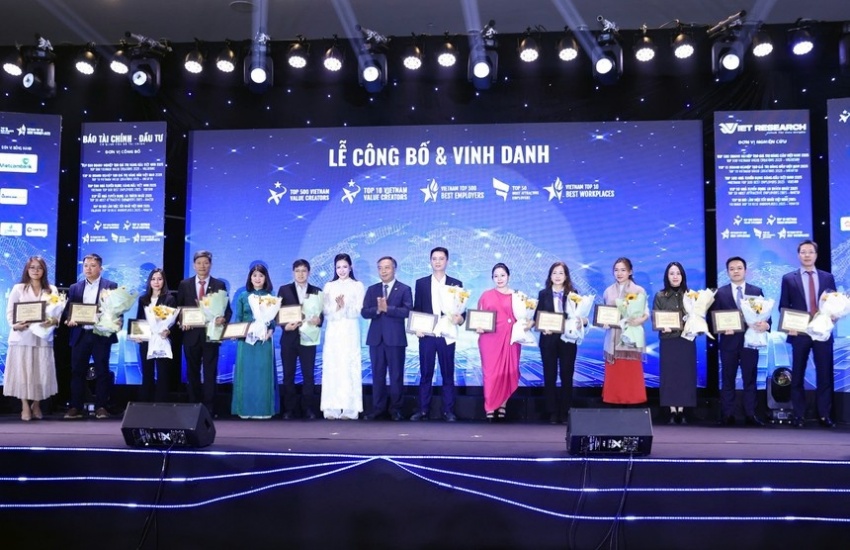
Vietnam's top 500 value-creating enterprises announced

VBE500 and VBW10 recognise enterprises with strong performance in building professional and positive working environments, improving employee experience and supporting workforce development. MAE50 honours enterprises that have maintained a position in the VBE500 for three consecutive years, reflecting sustained credibility and appeal to domestic and international talent.

These annual studies aim to recognise enterprises that have made notable contributions to improving human resource governance, organisational culture, employee welfare and workplace experience.

VALUE500 and VALUE10 recognise enterprises that demonstrate leadership in value creation, innovation and sustainable development, generating long-term value for businesses, shareholders, employees and society. As global economic uncertainty persists, supply chains continue to restructure and environmental, social, and governance (ESG) standards become more demanding, value creation is increasingly viewed as a core capability supporting resilience, market expansion, capital mobilisation and talent development.

“2025 continues to record highly commendable efforts by the business community in creating value for both their enterprises and the wider economy,” Le Trong Minh, deputy editor-in-chief of VIR, said at the event. “Despite ongoing global volatility and domestic restructuring, many enterprises have delivered strong results in both the pace and quality of growth, reinforcing their position in domestic and international markets.”

Companies in the VALUE500 and VALUE10 are moving away from growth models reliant on traditional resources towards value creation driven by ESG and innovation. More than 90 per cent have improved or developed environmentally friendly products and services, nearly 64 per cent have integrated sustainability principles across operations, and 73 per cent have incorporated environmental and social factors into risk management during the 2022–2025 period.

Tran Thi Ngoc Ha, CEO of Viet Research, said the survey results show a clear shift in development thinking among Vietnamese enterprises.

“Results further highlight the central role of human capital in long-term value creation,” Ha said. “More than 70 per cent of enterprises have digitalised human resource management, while 85 per cent prioritise workers with skills in AI, data and automation, alongside continued investment in welfare, culture and flexible working models.”

Viet Research also introduced its latest report on value-creating enterprises, which outlines key trends shaping Vietnam’s labour market during a period of deep restructuring. The study points to a rapid shift in skills demand, with repetitive roles declining and demand rising for analytical, data, technology, compliance, risk management and ESG-related positions.

Competition for talent is intensifying, the report said, with enterprises placing greater emphasis on purpose, learning opportunities, career pathways, mental wellbeing and employee experience. Organisations with sustainable strategies, transparent governance, advanced technology adoption and a people-centred approach are seen as holding a clear advantage in talent attraction.

Within this context, the rankings serve as benchmarks for enterprises seeking to strengthen governance capacity and contribute to higher-quality economic growth.

As part of the ceremony, a seminar on creating and leading sustainable transformation in finance and human capital was held. Nguyen Viet Long, deputy managing director of Consulting at EY Vietnam, said two major forces will shape the future of finance and accounting towards 2030: AI-driven digital transformation and ESG-led sustainable development.

“AI is already widely applied, improving efficiency, reshaping workflows and allowing professionals to focus on higher-value tasks, while ESG is driving new roles in green finance and the integration of sustainability into traditional positions,” he said.

Dang Thuy Ha, Northern Region director and corporate strategy advisor at Talentnet, also highlighted the growing impact of GenAI on workforce management.

“Technologies, particularly GenAI, are redefining core job functions across most professions,” said Ha. “This shift requires enterprises to redesign their operating models and human resource strategies.”

Top 500 private firms responsible for 18.4 per cent of revenue Top 500 private firms responsible for 18.4 per cent of revenue

Vietnam’s top 500 private enterprises (VPE500), were responsible for 18.4 per cent of the nation’s domestic private sector revenue between 2019 and 2021, according to an August 30 report from the Institute for Development Strategy and the Department of Industrial and Construction Statistics, under the General Statistics Office.

Vietnam's 500 most profitable firms for 2023 unveiled Vietnam’s 500 most profitable firms for 2023 unveiled

The latest PROFIT500 rankings, released on September 8 in partnership with Vietnam Report and Vietnamnet, highlight the 500 most profitable companies in Vietnam for 2023, with industry titans like Vietnam Oil and Gas Group (PetroVietnam) and Samsung Electronics topping the chart.

70 Vietnamese firms among ASEAN's Top 500 70 Vietnamese firms among ASEAN’s Top 500

70 Vietnamese businesses have been listed on the first-ever Southeast Asia Fortune 500 list, which operate in various sectors of the economy, most notably banking, energy, services, and production.

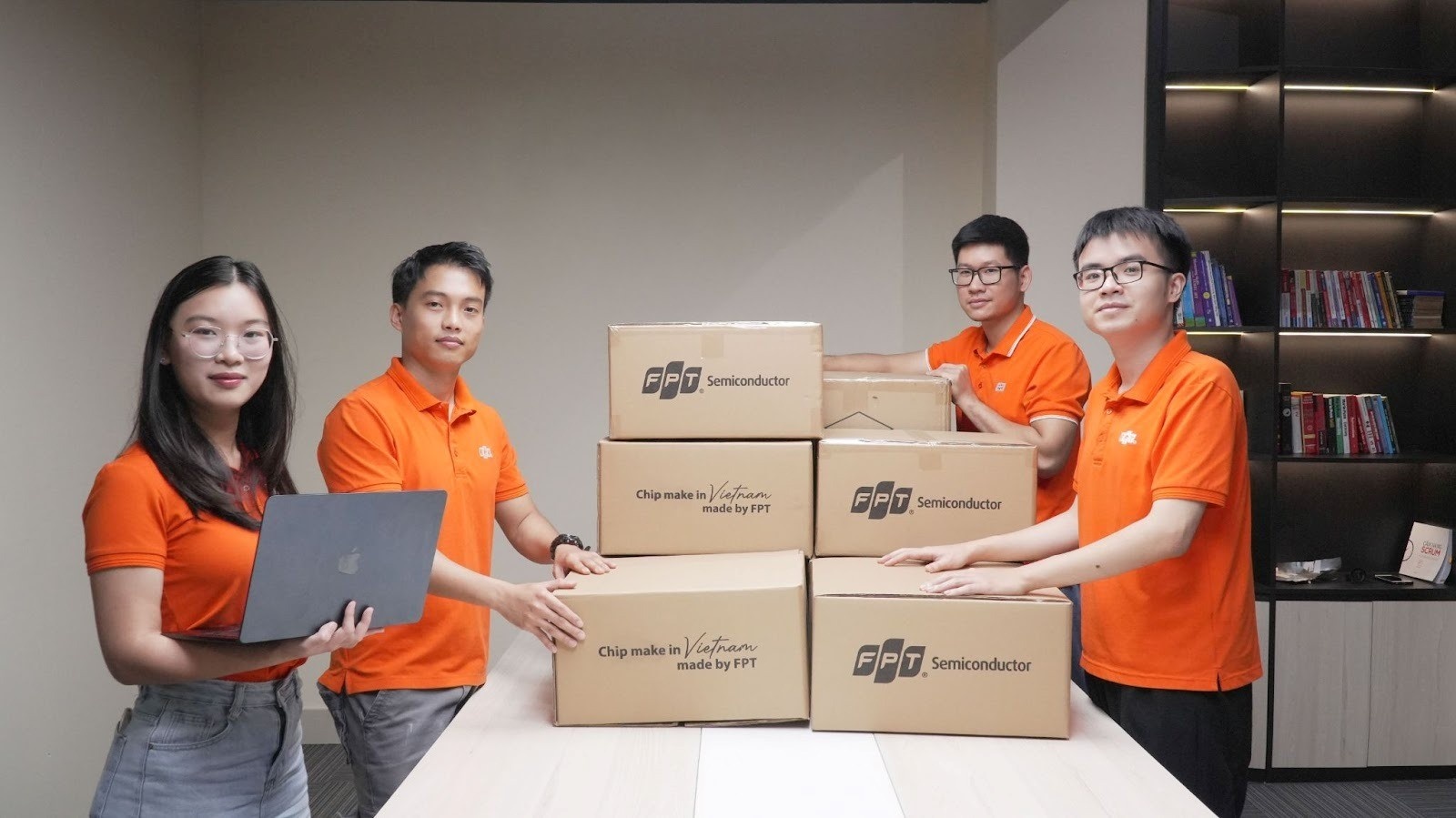
This milestone marks the initial step towards the goal of exporting FPT-designed chips to the Asia-Pacific market over the next three years.

FPT exports first chip shipment to Japan
FPT has exported its first commercial chip shipment to a leading Japanese electronics company

It is also the first time a Vietnamese company has successfully introduced commercial semiconductor chips to the Japanese market, one of the world’s most demanding markets in terms of quality and reliability.

FPT is now developing a comprehensive power IC ecosystem, encompassing multiple product lines such as PMICs, LDOs, BUCK converters, LED drivers, and Power MOSFETs, with the goal of delivering stable power supply and low-energy consumption for electronic devices.

Among these, the power chips recently exported to Japan are specifically designed for high-performance multi-function printers (MFPs) used in office and enterprise environments.

Designed by FPT, these chips manage and stabilise internal power supply, protect components from voltage and current fluctuations, and ensure reliable operation under high-load conditions.

This shipment represents a concrete outcome of the strategic cooperation agreement signed between FPT and Restar, on the sidelines of the Vietnam–Japan High-Tech, Green Transformation, and Semiconductor Cooperation Forum, witnessed by leaders of both governments.

Under the agreement, Restar aims to distribute 10 million chips designed and manufactured by FPT across the Asia-Pacific region within three years.

FPT engineers have continuously refined the chip design and optimised parameters to ensure the chips passed stringent global testing processes.

The products underwent comprehensive electrical characterisation, stability, noise and load response evaluations, JEDEC reliability testing, real-device validation for compatibility, as well as safety tests for over-voltage, over-current, and thermal stability in line with Japanese industrial-grade standards.

In addition, the chips comply with environmentally friendly material requirements and manufacturing processes, and chemical substance information is disclosed using the chemSHERPA tool, a standardised chemical substance management and information-sharing tool widely used in Japan, ensuring material transparency and alignment with the green supply chain requirements.

Following this first shipment, FPT and Restar will continue to collaborate on subsequent deliveries with increasing volumes to support Restar’s expanding market demand.

The two companies will also jointly research and develop new semiconductor products tailored to the Japanese market, including next-generation power management chips, controller ICs, and integrated circuits for office equipment, imaging devices, and consumer electronics.

Beyond product development, the partnership includes engineer exchange programmes, joint research and development projects to enhance design capabilities, and the establishment of a coordinated outsourced semiconductor assembly and test service model, covering packaging and testing.

By combining FPT’s chip design expertise with Restar’s supply chain strength and market experience, the collaboration is expected to create strong synergies and enable sustainable, efficient growth in the semiconductor business for both parties.

FPT exports first chip shipment to Japan
Following the first shipment, FPT and Restar will continue to collaborate on subsequent chip deliveries to meet the growing demand of Japanese customers

Commenting on this milestone, Tran Dang Hoa, chairman of FPT Semiconductor, FPT Corporation, said, “Exporting our first commercial chip shipment to Japan is not only a significant milestone for FPT, but also a strong affirmation of Vietnamese capabilities in core technologies.

We expect that, starting from this initial shipment, Vietnamese-designed chips will increasingly be used in consumer electronics, office equipment, the Internet of Things devices, and industrial applications.

We believe this achievement will help position Vietnam as an emerging destination on the global semiconductor map and open new opportunities for Vietnamese companies to participate more deeply in the global high-tech value chain.”

This shipment comes at a time when the global power ICs market is projected to reach approximately $59 billion by 2030, while the Japanese market alone is expected to approach $3 billion over the same period.

Demand for power chips continues to grow across multiple sectors, including consumer electronics, industrial equipment, automotive, and high-tech applications.

From a global perspective, recent disruptions in the semiconductor supply chain, most notably regulatory and geopolitical interventions affecting Nexperia’s operations, have underscored the growing need for supply diversification and the search for reliable alternative sources.

In this context, FPT is introducing a range of protection devices such as ESD and Zener diodes, commonly referred to as discrete power devices, with the expectation of serving as a complementary or alternative supply option in the Japanese, Korean, and Taiwanese markets.

FPT boosts presence in South Korea FPT boosts presence in South Korea

Vietnamese technology group FPT is strengthening its footprint in the South Korean market to drive AI-powered low-code adoption globally.

Phu Tai Group and FPT accelerate digital governance with SAP cloud ERP Phu Tai Group and FPT accelerate digital governance with SAP cloud ERP

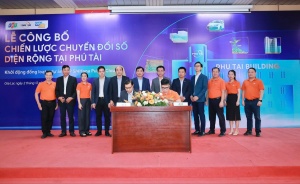
Phu Tai JSC in collaboration with FPT Corporation announced a new digital transformation strategy on December 2 and kicked off the SAP S/4HANA Cloud Public Edition deployment across seven key subsidiaries in the stone and wood sectors.

FPT and GELEX sign deal to develop blockchain tech for global markets FPT and GELEX sign deal to develop blockchain tech for global markets

FPT Corporation and GELEX Group signed an agreement on the development of blockchain technology in Hanoi on December 25.